Night Sky Moments to Experience on the Art Coast® in 2026
Travel trends come and go, but one of the most fascinating ones right now invites people to escape the city lights and simply look up. “Astrotourism”—travel centered around the night sky—is gaining popularity as more people seek out places where the stars shine brighter and cosmic events make evenings feel a little more magical.
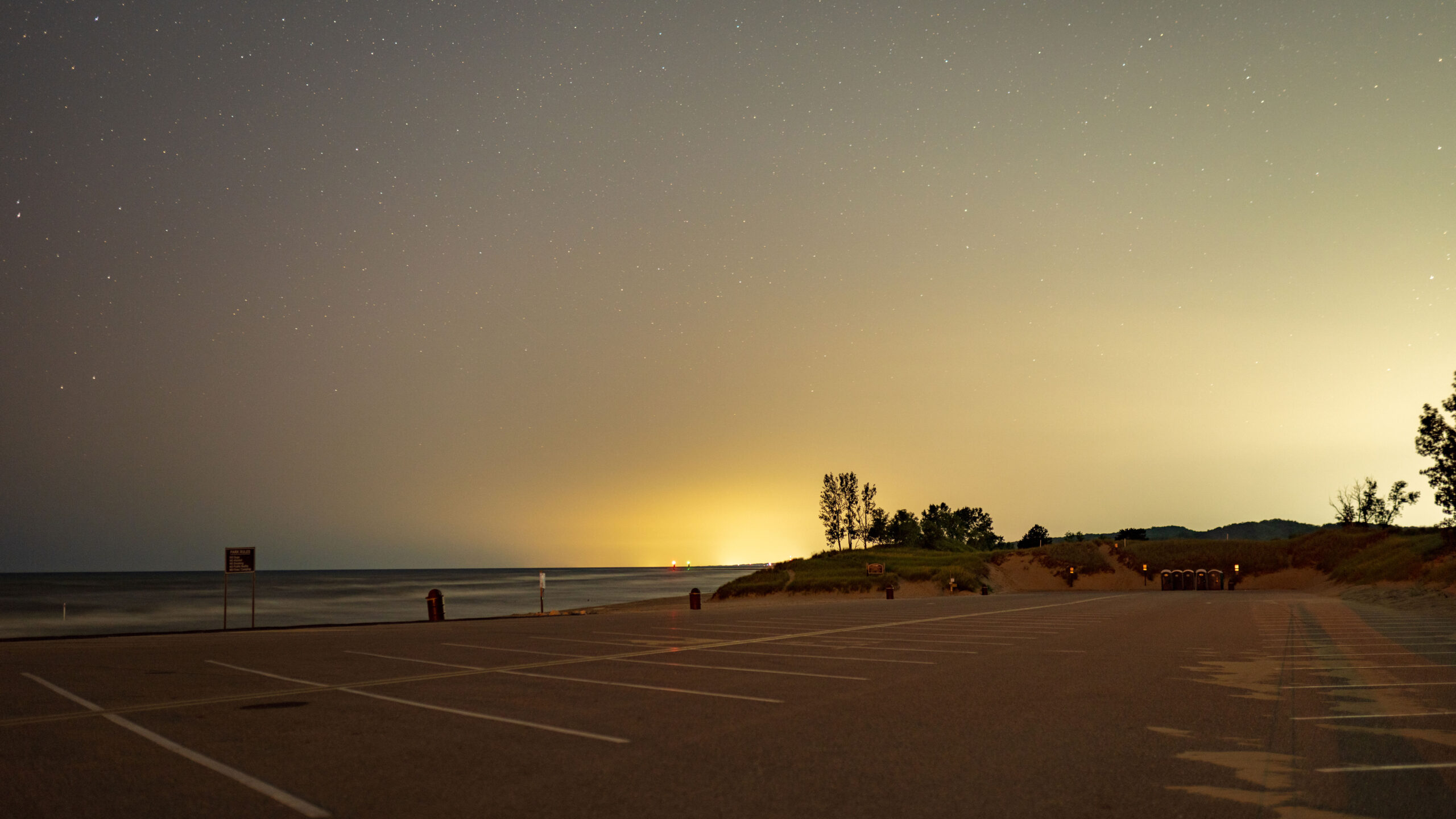
Along the Art Coast, that experience comes naturally. With stretches of open shoreline and unspoiled natural areas just outside town, the skies here often feel darker and deeper than what many visitors are used to seeing at home. After a day spent exploring galleries, biking scenic trails, or enjoying dinner by the water, stepping outside to find a sky full of stars is a pretty remarkable way to end the evening.
And in 2026, the night sky has plenty planned.
From meteor showers and planetary alignments to rare lunar events, this year offers a full calendar of celestial moments worth planning around.

April: The Season Begins Under the Lyrids
Spring nights mark the unofficial start of skywatching season along Lake Michigan. As temperatures become milder and skies begin to clear, April offers the perfect excuse to start looking up.
The month begins with International Dark Sky Week (April 13–20), a global celebration that encourages people to appreciate and protect the beauty of the night sky. Along the Art Coast—where stretches of shoreline and natural areas offer darker skies than many urban areas—it’s an ideal time to step outside and rediscover the stars overhead.
Later in the month, the Lyrids Meteor Shower (April 21–22) brings one of the first opportunities of the year to catch meteors streaking across the sky. Observed for thousands of years, the Lyrids are known for occasional bright bursts of activity. Step outside after midnight, find a darker stretch of beach or park, and you may catch a handful of shooting stars.
Late Spring: A Rare Blue Moon
One of the most unusual lunar moments of 2026 arrives on May 31, when the sky delivers a Full Blue Moon. Despite the name, the moon won’t appear blue. Instead, the term refers to the rare occurrence of a second full moon within the same month. Because of this timing quirk, 2026 will feature 13 full moons instead of the usual 12.
Along the lakeshore, full moons can be especially striking as their light reflects across the water. Even a simple evening walk along the beach can turn into an unexpectedly memorable experience when the moon rises over Lake Michigan.
Early Summer: A Planetary Pairing
On the evening of June 8–9, skywatchers will witness a beautiful planetary alignment as Venus and Jupiter appear extremely close together in the sky.
These are the two brightest planets visible from Earth, and during this event, they’ll appear separated by only the width of a pinky finger held at arm’s length. No telescope is required to see these celestial neighbors in this arrangement—just a clear view of the western sky after sunset.
Midsummer: A Night of Shooting Stars
For many stargazers, the highlight of the year arrives in August with the Perseids Meteor Shower (August 12–13).
The Perseids are widely considered the most spectacular meteor shower of the year, known for producing bright streaks of light and frequent meteors during peak hours. In 2026, the timing works especially well because the moon will not interfere with viewing, making conditions ideal if skies are clear.
Autumn: Quiet Skies and Hidden Meteors
As fall arrives, cooler air and crisp evenings can bring some of the clearest skies of the year.
Several meteor showers appear across autumn, including the Draconids (October 7) and the Orionids (October 21–22). While these showers are typically smaller than the Perseids, they still offer a chance to catch meteors streaking overhead during peaceful fall nights.
By November, two more meteor showers take the stage—the Taurids (November 4–5) and the Leonids (November 17)—offering more opportunities for patient skywatchers.
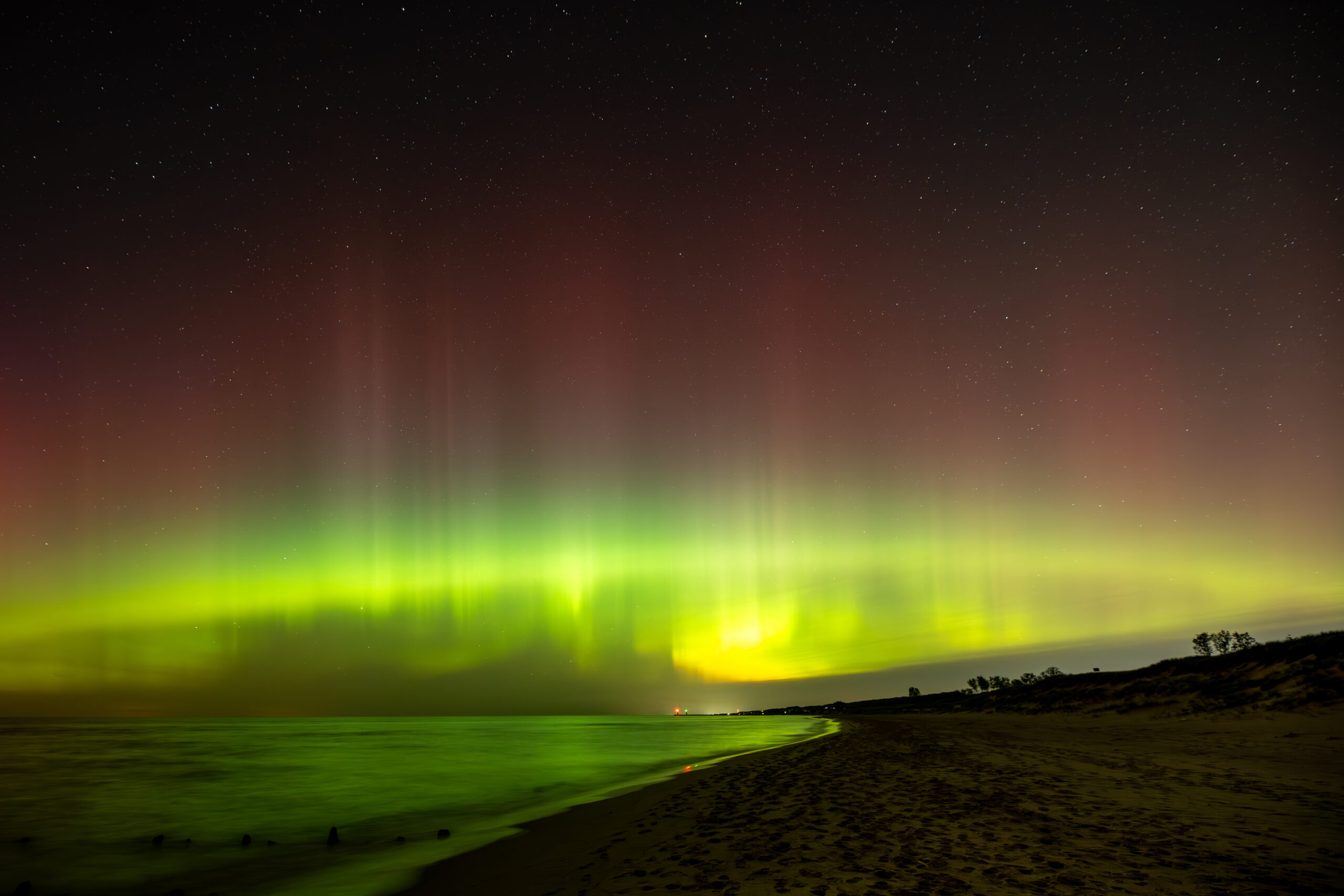
Late fall can also be one of the best seasons for spotting the Northern Lights along the Lake Michigan shoreline when solar activity cooperates. On rare nights when auroras reach this far south, the view across the open lake can provide an especially dramatic backdrop. But don’t be discouraged if you can’t see them with the naked eye. Often, a camera or smartphone can reveal colors and details that are otherwise invisible to the human eye.
Winter: The Year Ends With a Cosmic Finale
As the year winds down, December delivers several final celestial highlights.
The Geminids Meteor Shower (December 13–14) is famous for producing bright meteors that sometimes glow green as they burn through Earth’s atmosphere. Catching one requires a bit of patience—but when they appear, they’re unforgettable.
Later in the month, the sky offers one more spectacle: a Christmas Eve Supermoon on December 24. A supermoon occurs when the full moon reaches one of its closest points to Earth, making it appear larger and brighter than usual.
Where to Watch the Sky Along the Art Coast
While cosmic events can be seen from almost anywhere, finding darker skies makes the experience even more impressive. For the best views along the Art Coast, head to the more rural areas around Saugatuck/Douglas/Fennville, where light pollution is minimal.
Wide open shorelines like Oval Beach feature unobstructed views of the horizon, while nearby West Side County Park and Pier Cove Beach are also idyllic places to settle in and watch the sky unfold. And many of our vacation rentals, listed here, feature properties in secluded areas that are ideal for stargazing.
For those who want to take their skywatching a step further, the Hemlock Crossing Observatory in Ottawa County—just a 30-minute drive north—offers a chance to explore the night sky through a powerful telescope. Located within Hemlock Crossing Park, the public observatory houses a 16-inch Schmidt-Cassegrain telescope and is open to the public on Friday evenings throughout the year, when viewing conditions are just right. Visitors can observe planets, star clusters, and distant galaxies with guidance from local astronomy volunteers.