History on the Hill: How a Cold War Relic Became an Art Coast® Landmark
If you’ve spent any time in Saugatuck, you’ve probably noticed it—a large white ball perched high above the trees, looking like a misplaced moon or spaceship. It’s one of the Art Coast’s most distinctive landmarks, and it has watched over the harbor for more than sixty years. But what many visitors don’t realize is that this gentle giant once played a pivotal role in one of the most tense chapters in American history.
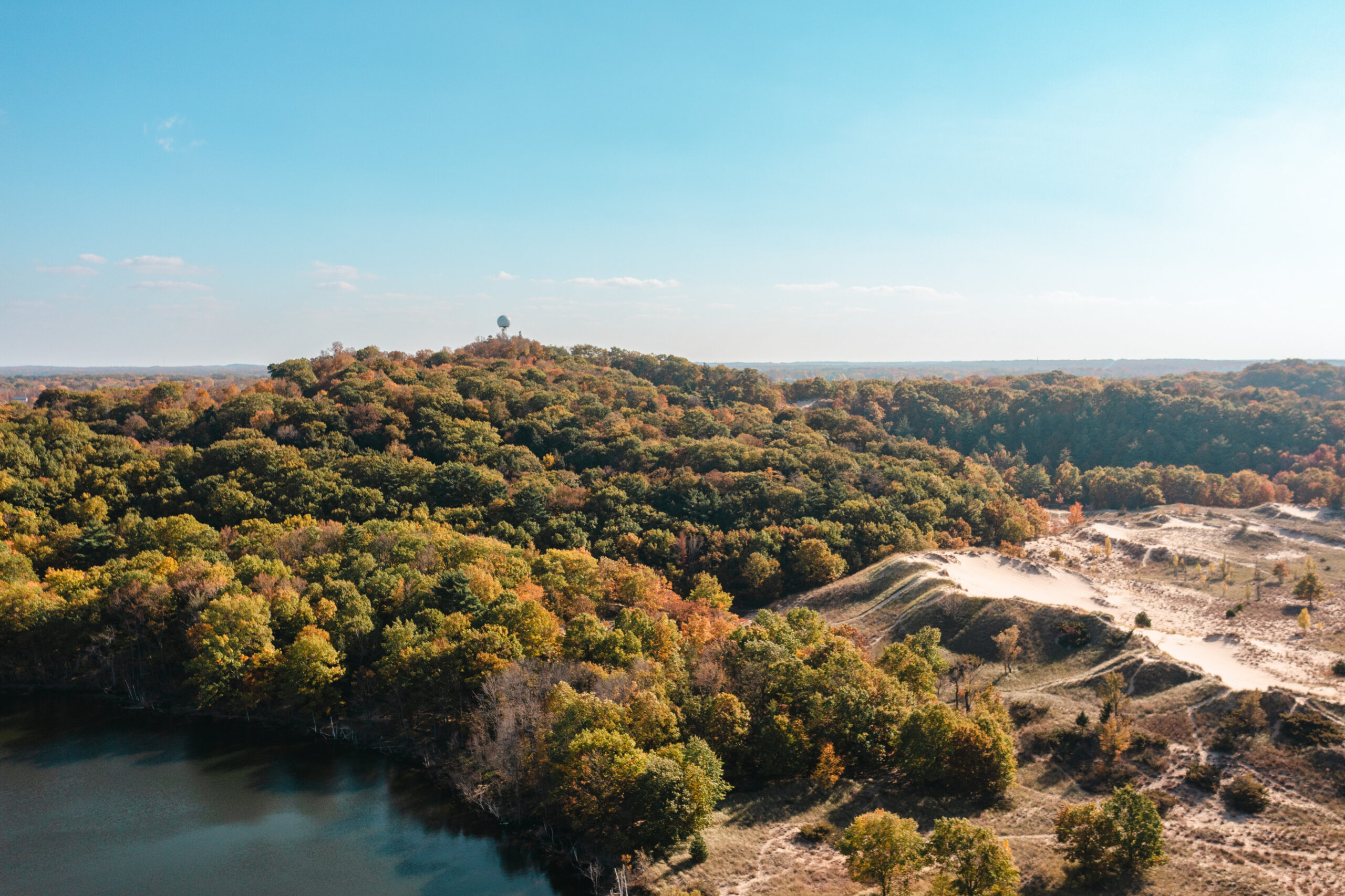
Born of Cold War fears and the struggle for military and technological dominance, the Mount Baldhead Radar Tower once scanned the skies for enemy aircraft. Today, it stands not as a warning, but as a piece of living history, thanks to the community that saw value in preserving its story.

A Watchful Eye Over Lake Michigan
In the 1950s, the threat of a Soviet air attack loomed large. Across the country, the U.S. Air Force was building radar towers to watch the skies for bombers flying “under the radar” across the northern border. Mount Baldhead, with its towering 230-feet-high dune between downtown Saugatuck and Lake Michigan, offered an ideal location.
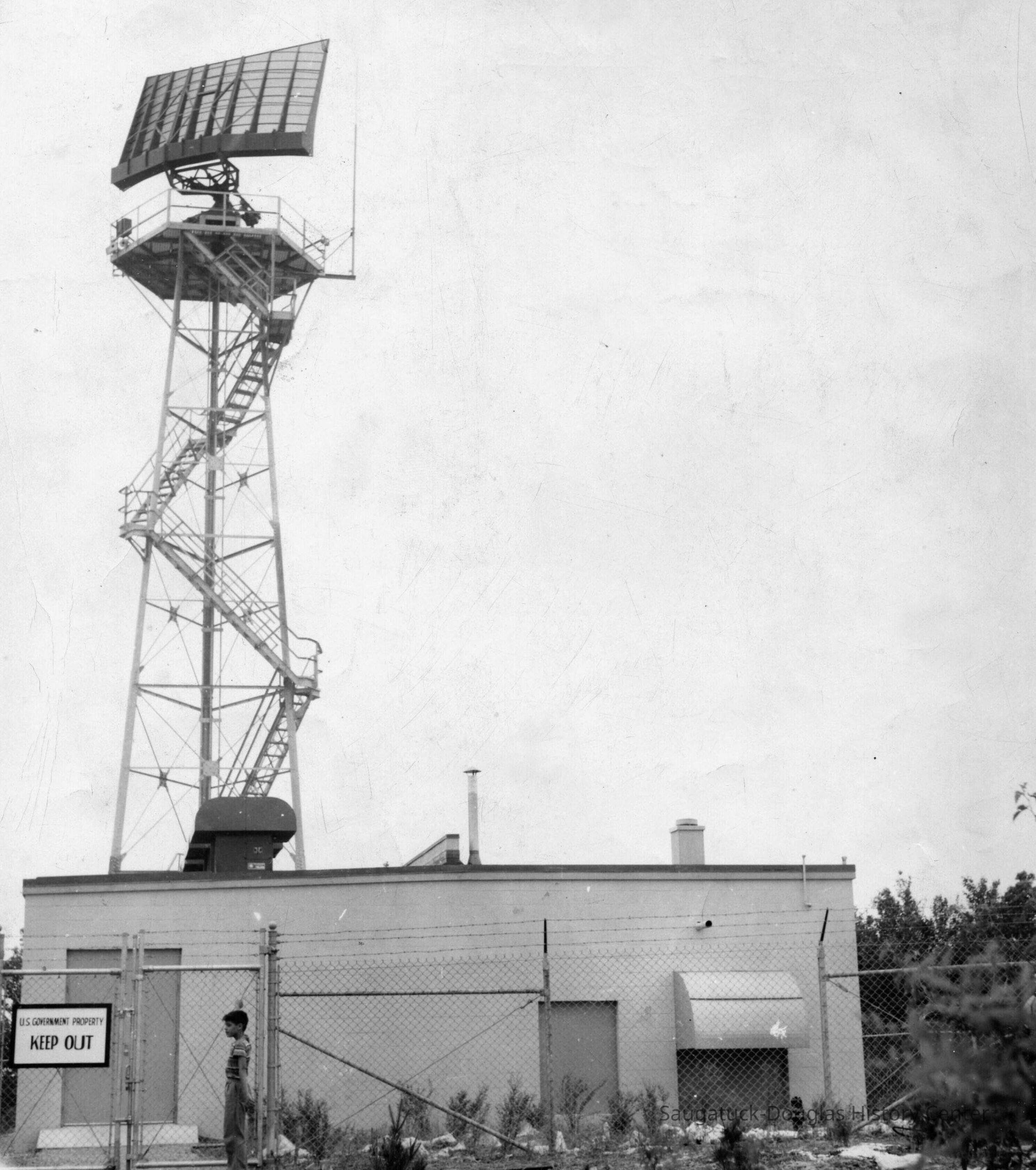
In 1956, the Air Force struck a deal with the Village of Saugatuck: they’d lease a small piece of land at the dune’s summit in exchange for rebuilding the worn wooden staircase and planting vegetation to keep the sand in place. Construction began soon after, and by 1958, the radar station was transmitting data to a command center in Battle Creek, Michigan, as part of the nationwide SAGE (Semi-Automatic Ground Environment) defense system—a state-of-the-art network linking radar sites to massive computers designed to detect and respond to airborne threats.

From Defense to Discovery
The Mount Baldhead station was unmanned but packed with the latest technology of its time, including a Bendix AN/FPS-14 radar unit powered by twin diesel generators. In 1963, the Air Force replaced the radar with a more advanced AN/FPS-18 model and enclosed it in the fiberglass dome that still crowns the dune today. But as defense technology evolved, the system became obsolete, and in 1968, the site was officially decommissioned.
When the Air Force’s lease ended, the Village of Saugatuck purchased the entire setup—tower, building, and equipment—for a mere $250. Of the many “gap filler” radar sites once built across the country, only one other remains intact, making the Mount Baldhead Radar Tower one of the rare survivors of an era when fear and innovation shared the same sky.
A New Kind of Signal
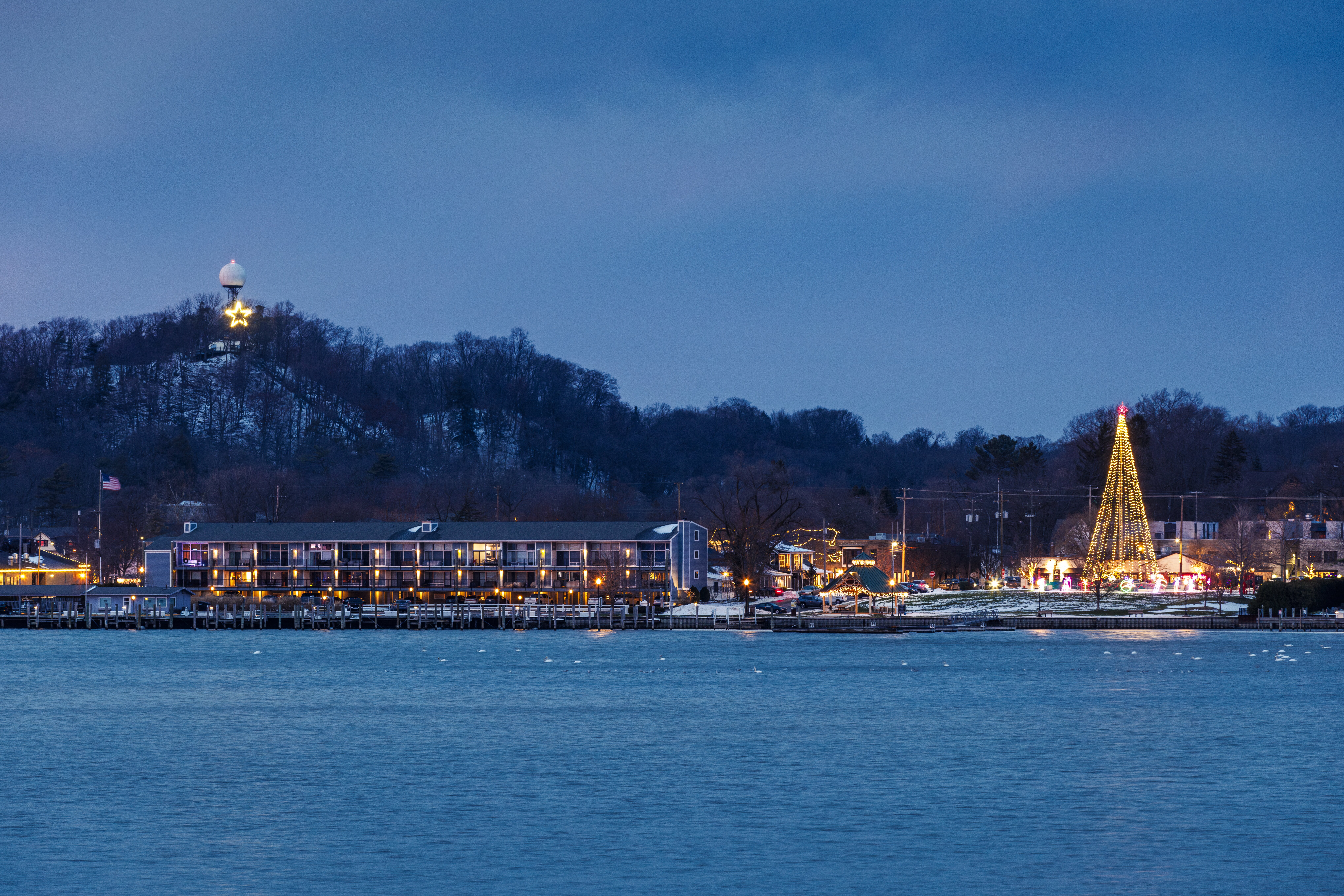
Once the military equipment went silent, locals gave the tower a new purpose. Since the 1950s, Saugatuck had celebrated the holidays with a lighted star overlooking the river. After the radar station became village property, the beloved star found its permanent home on the tower—where it still shines each winter, a symbol of hope rather than wariness.
Over time, the small operations building beneath the tower began to deteriorate, but community members rallied to preserve the site and its story. Thanks to their efforts, the Mount Baldhead radar station earned a place on the National Register of Historic Places, ensuring that this piece of Cold War history will continue to stand watch over the Art Coast for generations to come.
A Hike Toward History
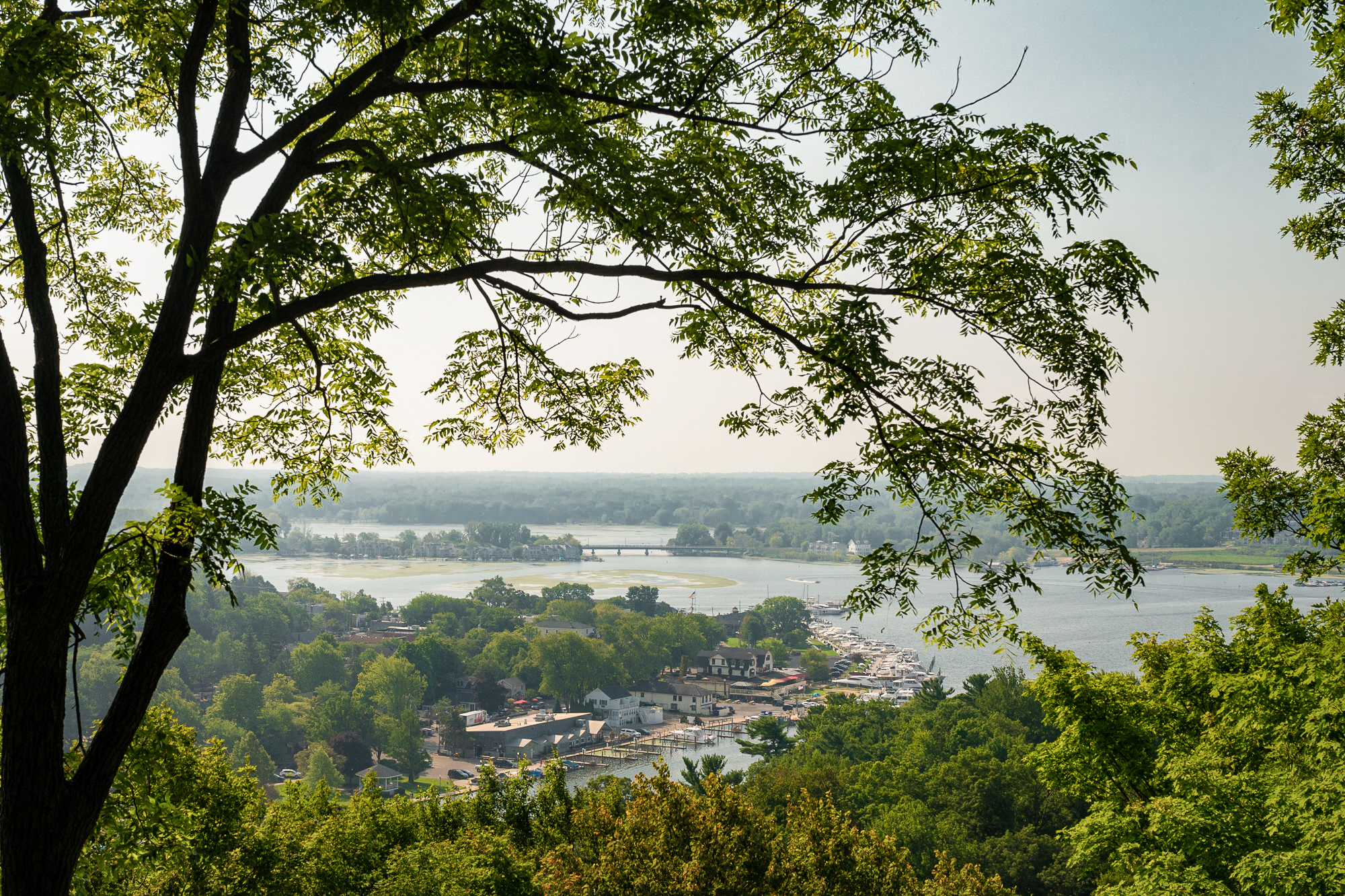
The best way to experience this landmark is to earn the view with a little physical effort. Start at Mount Baldhead Park and climb the 303 wooden steps to the top of the staircase (don’t worry, benches are thoughtfully placed along the way so you can rest if you need to), and you’ll find yourself eye-to-eye with the great white globe, along with stunning panoramic views of Saugatuck, Douglas, and Lake Michigan.
* Special thanks to the Saugatuck-Douglas History Center for the background information for this article.